
Why Justice Is Not Instant
When protests turn violent, many people expect quick arrests and immediate justice. They want clear answers right away. When those answers do not appear, frustration often grows.
However, the legal system does not move at the pace of social media or public anger. What may look like silence or delay is usually a set of legal steps unfolding quietly at the same time.
This article explains what actually happens after violence during a protest, using clear language and simple reasoning. It is not about news, politics, or opinion. It is about how the legal process works in real life.
A Key Idea to Understand First
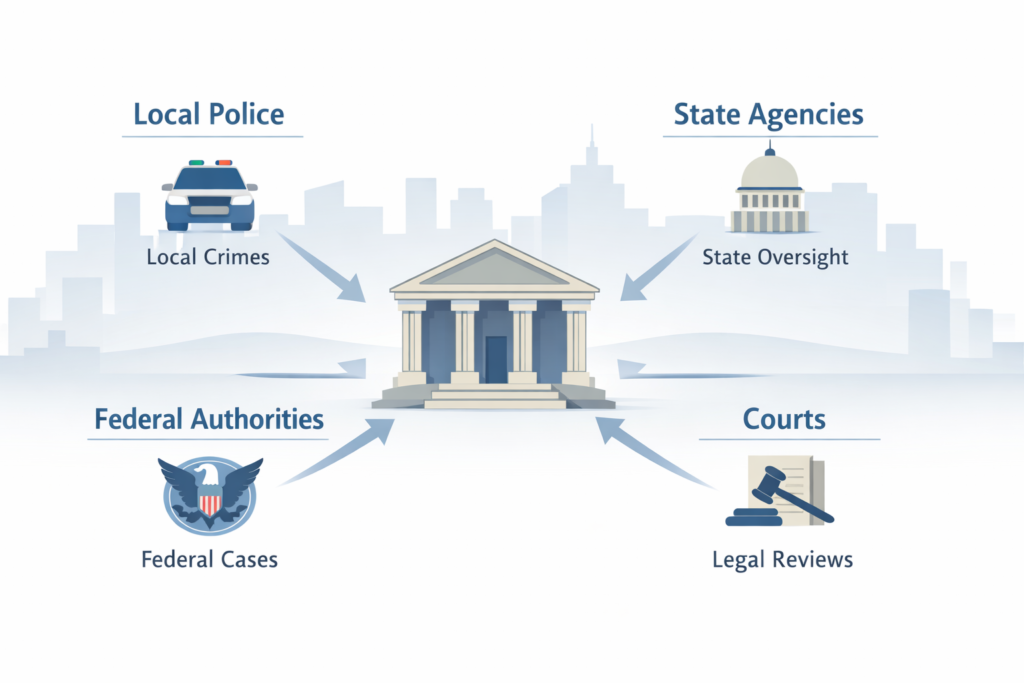
Justice after protests does not follow one straight road.
It follows multiple legal tracks at the same time.
This point is essential. Many people assume there is one investigation and one final decision. In reality, several legal systems move in parallel, each with a different role, authority, and timeline.
The First 24 Hours: Safety Comes First
When violence begins, the immediate priority is not punishment. It is safety.
During the first day, authorities focus on:
- Stopping ongoing violence
- Dispersing large or dangerous crowds
- Providing medical care to injured people
- Securing locations and protecting property
At the same time, evidence collection begins quietly. Officers preserve scenes, gather physical items, and secure video footage. None of this is dramatic or highly visible to the public.
The first goal is control and safety, not arrests.
This stage often feels unsatisfying to observers, but it prevents further harm and creates the foundation for later legal action.
Different Investigations Start at the Same Time
This is where confusion usually begins.
After a violent protest, several investigations start at once, and they do not combine into a single case.
Here is how the process usually works:
- Local police investigate local crimes such as vandalism, assault, or arson.
- State agencies review broader threats, coordination failures, or oversight issues.
- Federal agencies examine incidents involving federal officers or federal property.
- Independent investigators assess use-of-force incidents to ensure legal standards were followed.
Each group operates under its own rules, authority, and pace. No agency can force another to move faster. This is why official updates often sound limited, cautious, or repetitive.
Why Arrests Are Often Delayed
This stage creates the most public anger.
People see videos online and assume guilt is clear. From a legal perspective, it rarely is.
Arrests are delayed because:
- Videos must be verified for time, location, and full context.
- Witness statements must be reviewed and cross-checked.
- Use-of-force rules require careful legal examination.
- Incorrect arrests can weaken or destroy entire cases.
Legal teams must confirm facts before taking action. Moving too quickly can result in charges being dismissed later in court. Use-of-force cases often require careful legal review under established civil rights standards, which can delay public action.
A key point to remember:
Delay does not mean protection. It often means caution.
Why Protesters and Officers Face Different Timelines
This difference often feels unfair, but it comes from legal structure, not favouritism.
In most situations:
- Protesters are charged more quickly under local criminal law.
- Officers are reviewed under professional standards and legal guidelines.
Officers usually go through:
- Internal review processes
- External oversight
- Legal evaluation of authority and duty
Public charges, if they occur, often come later. These steps exist to determine whether actions were lawful, not only whether harm occurred.
This difference reflects process, not judgment.
The Role of Courts During Ongoing Protests
Courts play a limited but critical role during periods of unrest.
Judges do not respond to public emotion. Their responsibility is to apply the law carefully, even when tension is high.
This cautious approach helps explain why court decisions related to recent protests in Minnesota have taken time to unfold.
Courts typically:
- Avoid emergency bans unless strict legal standards are met
- Require strong, verifiable evidence before intervening
- Separate legal decisions from political pressure
Courts move slowly to avoid mistakes during moments of high tension. This pace protects long-term justice, even when it feels frustrating in the short term.
What Happens Weeks and Months Later
Legal outcomes take time. Understanding the general timeline helps set realistic expectations.
- Weeks later: preliminary findings may be released
- Months later: charges may be filed or dismissed
- Longer term: civil lawsuits may begin
These stages often occur quietly, without daily updates. This is normal. Legal systems are designed to prioritise accuracy over speed.
Why This Process Often Feels Unfair
Public frustration is understandable.
Several factors increase distrust:
- Videos appear long before investigations are completed
- Official silence feels like avoidance
- Legal language sounds distant and impersonal
However, the legal system is built to reduce error, not to respond emotionally.
An important truth remains:
The legal system values accuracy over speed, even when emotions are high.
This design helps prevent wrongful charges and protects long-term justice, even when short-term anger grows.
Final Thoughts
Violence during protests creates chaos, fear, and confusion. The legal process that follows is not simple, fast, or dramatic. It is layered, cautious, and often invisible.
Understanding how these legal tracks work helps explain why justice takes time—and why silence does not always mean inaction.
This knowledge does not require agreement or trust. It simply provides clarity during moments when emotions run high and answers feel far away.