
Former U.S. President Donald J. Trump posted on his social media platform. He claimed that new economic figures show fast growth in the United States.
These claims come as economists continue to compare economic trends across recent administrations.
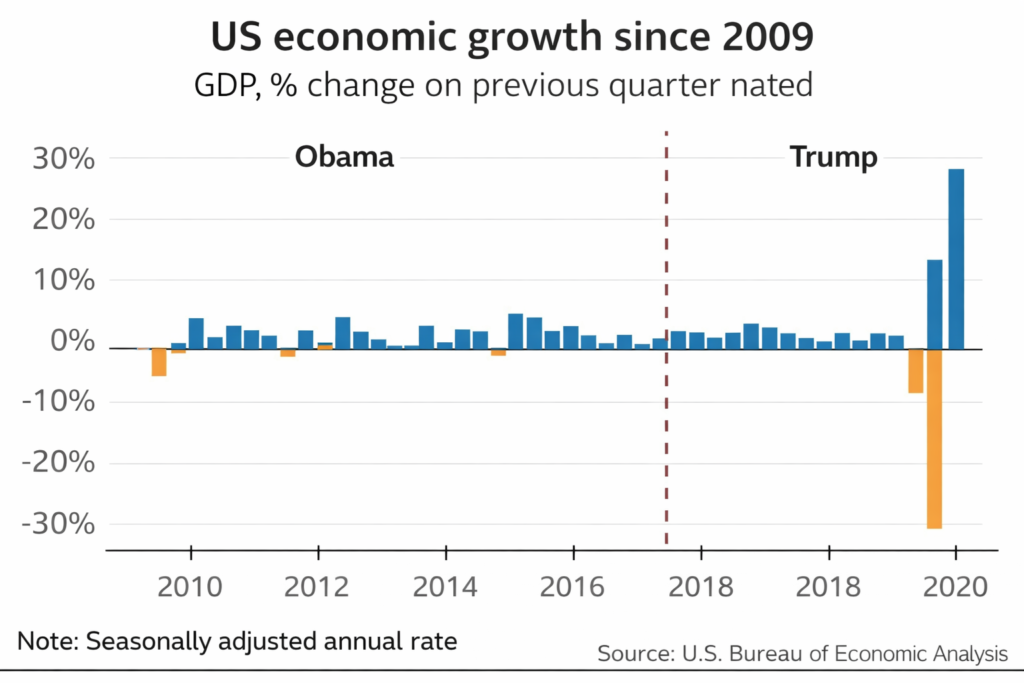
In the messages, Trump said the U.S. trade deficit has dropped to its lowest level in many years. He also stated that economic output is expected to rise strongly, even after recent political disruptions.
The posts quickly drew attention online and were widely shared. They add to the ongoing debate over the state of the U.S. economy and the impact of past policy choices.
What happened
Trump recently stated that new figures reveal the U.S. trade deficit is the smallest since 2009. He suggested the gap between imports and exports is still shrinking.
He also claimed that overall economic growth, measured by gross domestic product (GDP), is expected to exceed 5%. Trump says this growth happens even with losses from a federal government shutdown.
Trump connected these results to tariffs imposed during his presidency. He argued that these trade measures strengthened both the economy and national security.
In a separate post, he described a surge in manufacturing activity and rising household incomes. He said private-sector growth and business investment are increasing while inflation pressures are easing.
Trump concluded by encouraging investment in the U.S., saying the country is leading global economic performance.
What the claims are based on
Trump’s statements refer to economic indicators such as trade data, GDP forecasts, and inflation trends. These indicators are usually reported by U.S. government agencies and private analysts.
The trade deficit measures how much more a country imports than it exports. A lower deficit can reflect stronger exports, weaker imports, or changes in global demand.
GDP growth shows how fast the economy is expanding. High growth rates can signal strong consumer spending, investment, or government activity.
Inflation tracks how quickly prices rise. Slower inflation can increase purchasing power for households, but it also depends on broader economic conditions.
Trump did not link directly to official reports in his posts. As a result, readers are left to compare his claims with published data from government and independent sources.
Why it matters
Economic performance is a major issue for voters, businesses, and global markets. Claims of strong growth and falling deficits can influence public confidence and investment decisions.
Trade policy, especially tariffs, remains a key point of debate. Supporters say tariffs protect domestic industries, while critics argue they raise costs and disrupt supply chains.
Statements about easing inflation are also closely watched. Inflation affects everyday expenses such as food, fuel, and housing, making it a central concern for households.
Trump’s posts also come at a time when economic messaging is politically sensitive. Competing narratives about growth, jobs, and prices shape public discussion ahead of major legal and political events.
By tying economic outcomes to his past policies, Trump is reinforcing his broader argument about leadership and results.
Reactions and context
The posts sparked thousands of replies and shares within hours. Supporters echoed Trump’s claims, while critics questioned the accuracy and timing of the statements.
Economists often caution that single data points do not tell the full story. Trade deficits and GDP figures can change from quarter to quarter due to many factors.
Inflation trends also vary across sectors. Even when overall inflation slows, some prices may continue to rise faster than others.
Since Trump is no longer in office, responsibility for the economy now falls on multiple administrations and global factors.
What happens next
More official economic reports are expected in the coming weeks, including updated trade, inflation, and growth figures. These releases will allow clearer comparisons with Trump’s claims.
Analysts will likely examine whether recent trends match the picture described in the posts. Any gaps between claims and data may fuel further debate.
Trump is expected to continue using social media to comment on the economy and national issues. His statements are likely to remain a focal point for both supporters and critics.
For the public, the key question will be how current economic data affects jobs, prices, and long-term stability. As new numbers emerge, attention will turn to how they shape policy discussions and political narratives.