
Why Minnesota Is in the Spotlight
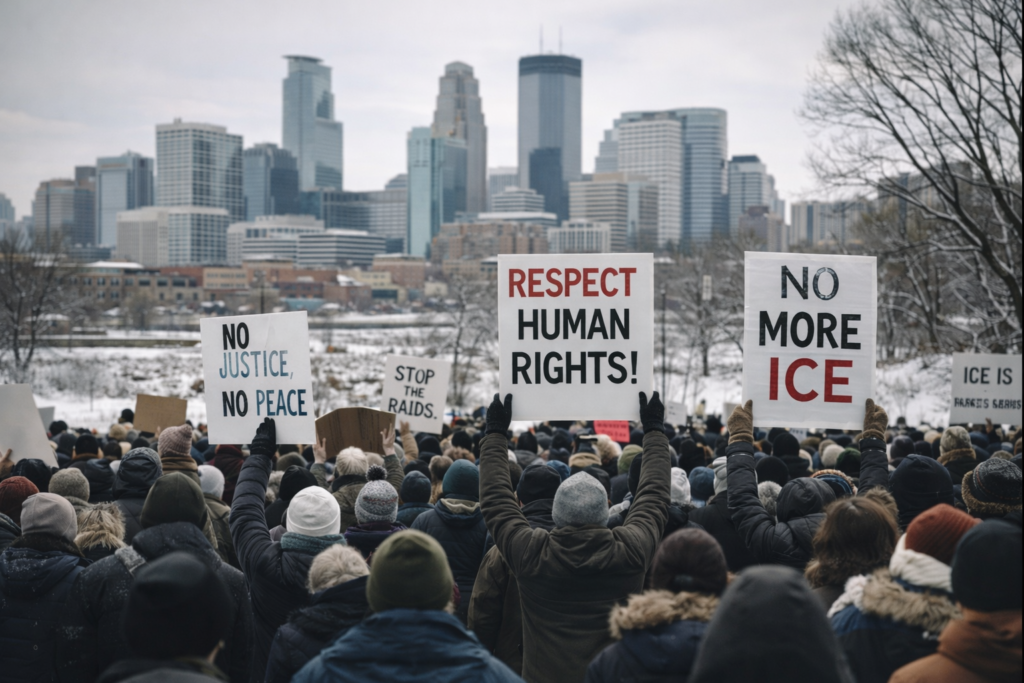
In early January 2026, Minnesota suddenly became the centre of national attention. Federal immigration officers carried out large operations in and around Minneapolis, and what followed shocked many people. There were arrests, shootings, angry protests, and strong political warnings from Washington. As tensions escalated, President Donald J. Trump stated that he could invoke a powerful law known as the Insurrection Act if the situation deteriorated further.
What started as immigration enforcement quickly turned into a bigger debate about public safety, civil rights, and federal power.
How It All Started
The situation began when U.S. Immigration and Customs Enforcement (ICE) increased enforcement actions in the Minneapolis area. Federal officials said the goal was to arrest people suspected of immigration violations and serious crimes.
During these operations, two serious incidents occurred:
- In one case, an ICE agent shot and killed a woman during an enforcement action.
- Days later, another ICE agent shot a man during a traffic-related encounter, saying it was done in self-defence.
Both incidents were confirmed by federal authorities, but details remain under investigation. These shootings deeply upset many local residents and quickly led to protests.
At the same time, videos began spreading online showing ICE agents questioning people in public places. Some residents claimed that Black and Brown Americans were being stopped and questioned without clear reasons. These claims increased fear and anger in the community.
Protests Across Minneapolis
Soon after the shootings, protests broke out across Minneapolis. Crowds gathered near neighbourhoods where ICE operations were reported. Many people held signs, chanted, and demanded answers.
Some protests were peaceful, while others became tense. In a few cases, demonstrators and federal officers faced off in residential areas. Videos showed people filming officers, asking them to leave neighbourhoods, and questioning their authority.
Local residents interviewed by TV stations shared mixed feelings. Some said they were afraid to let family members go outside. Others said they supported immigration enforcement but wanted it done safely and legally. Many people felt confused. They didn’t understand why the federal government was taking such strong action in their city.
Claims of Illegal Arrests and Public Interrogations
Another major issue was a widely shared video showing ICE agents entering private property, confronting a man who was filming them, and arresting him. According to public posts, the man was later released without charges after several hours.
Civil rights groups and activists said this showed abuse of power. They argued that filming police or federal agents is legal and protected under the Constitution. ICE officials have not admitted wrongdoing and said reviews are ongoing.
The claim that ICE was “randomly interrogating” Black and Brown Americans became a key talking point online. Supporters of ICE said officers act on information and investigations, not race. Critics said the pattern raised serious concerns. These opposing views fueled even larger protests.
Federal Response and Trump’s Statements
As protests continued, President Donald J. Trump addressed the situation on social media. He said ICE agents were doing their jobs and accused local leaders of failing to control the unrest.
Trump warned that if Minnesota officials did not restore order, he could use the Insurrection Act. This law allows the president to send U.S. military forces into the country during extreme unrest.
The statement drew immediate national attention. Supporters said the president was protecting law enforcement. Critics said the warning could escalate tensions instead of calming them.
What is the Insurrection Act?
The Insurrection Act is a U.S. law from 1807. It allows the president to deploy the military within the United States if states cannot control violence or rebellion on their own.
It has been used very rarely in modern history. Because of this, even talking about using it is a serious step. Legal experts say the law gives strong powers, but it also raises concerns about civil liberties and the role of the military in civilian life.
So far, the Act has not been applied in Minnesota. Trump’s comments were a warning, not an order.
Minnesota Leaders and Legal Action
Minnesota state and city leaders responded by calling for calm. They said violence is not the answer and asked residents to protest peacefully. At the same time, they said they want clear answers from federal agencies.
A request was made in court to block ICE operations in the state. However, a judge declined to immediately stop the operations, meaning ICE activity continues for now.
State officials have also said independent investigations into the shootings are underway.
For readers wondering why arrests or charges do not happen immediately, the legal process after a protest turns violent follows multiple investigations and timelines.
Why This Situation Matters
What is happening in Minnesota is not a local issue. It raises national questions:
- How much power should federal agencies have in local communities?
- How can immigration laws be enforced without harming trust?
- When does public unrest justify stronger federal action?
The answers could influence how other states handle similar situations.
Closing: What Comes Next
As of now, ICE operations continue in Minnesota, protests are ongoing, and investigations are still active. The situation remains tense but closely watched by the nation.
Whether tensions ease or grow will depend on how federal officials, local leaders, and communities move forward. Minnesota has become a key example of how immigration enforcement, public reaction, and federal authority can collide—shaping a debate that goes far beyond one state.