
U.S. lawmakers have asked the Internal Revenue Service to determine whether a California-based nonprofit violated federal tax rules, raising fresh questions about how tax-exempt organizations use public funds.
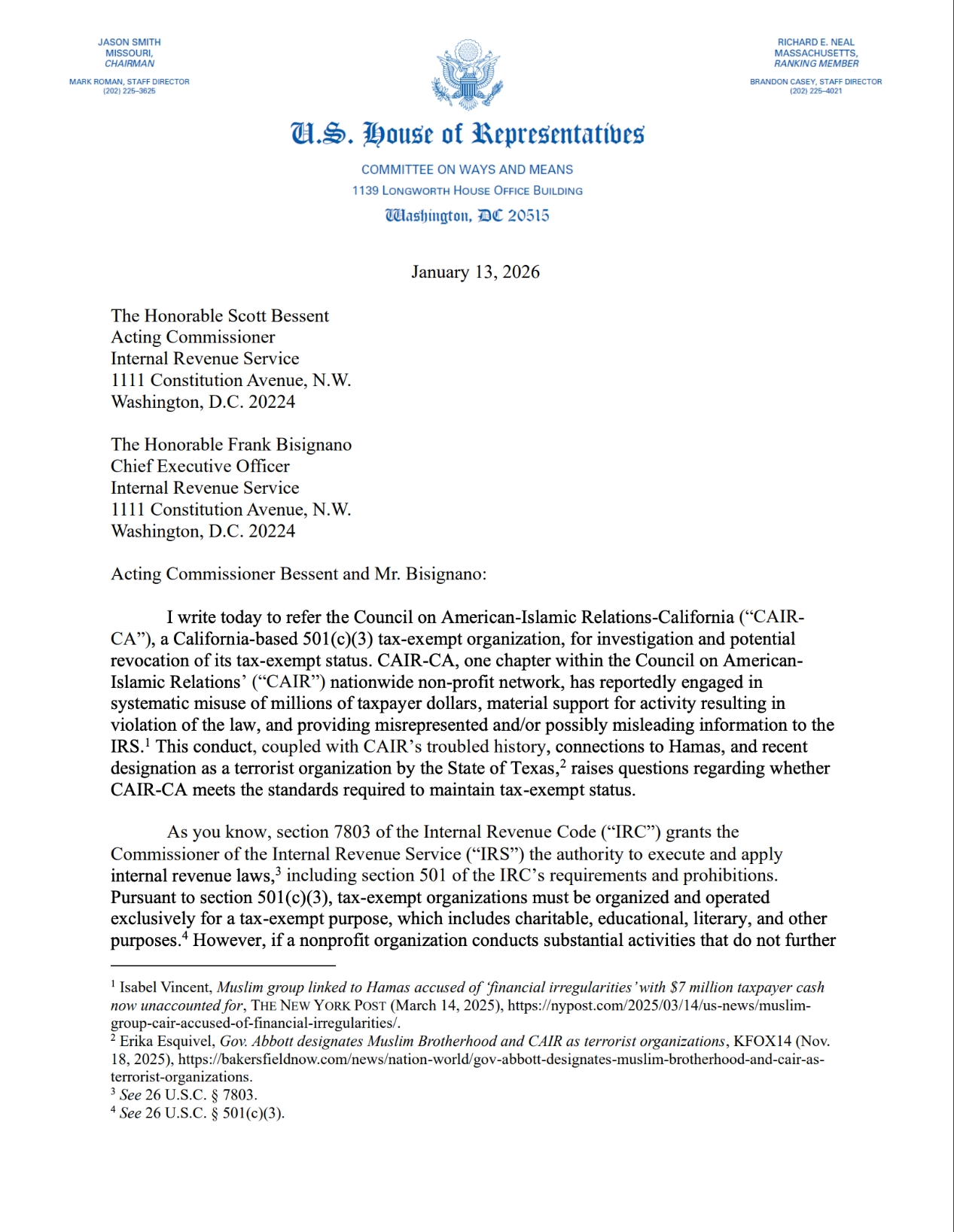
On January 13, members of the U.S. House Committee on Ways and Means sent a letter to the IRS requesting a review of the tax-exempt status of the Council on American-Islamic Relations–California. Lawmakers cited concerns over the alleged misuse of taxpayer dollars and activities that may conflict with federal charity laws.
The request does not represent a final judgment of wrongdoing. However, it reflects growing scrutiny of nonprofit organizations and how they operate under federal tax exemptions.
What Triggered the IRS Referral
House Ways and Means Chairman Jason Smith sent the letter to senior IRS officials, including Acting Commissioner Scott Bessent and Chief Executive Officer Frank Bisignano.
Lawmakers allege that the organization, commonly known as CAIR-CA, may have violated requirements under section 501(c)(3) of the Internal Revenue Code. Under federal law, tax-exempt charities are prohibited from participating in certain political activities or supporting actions that conflict with public policy.
The lawmakers asked the IRS to determine whether CAIR-CA continues to meet the legal standards required to maintain its tax-exempt status.
Rules Governing Tax-Exempt Organizations
Organizations classified under section 501(c)(3) are exempt from federal income taxes but must operate exclusively for charitable, educational, or similar purposes.
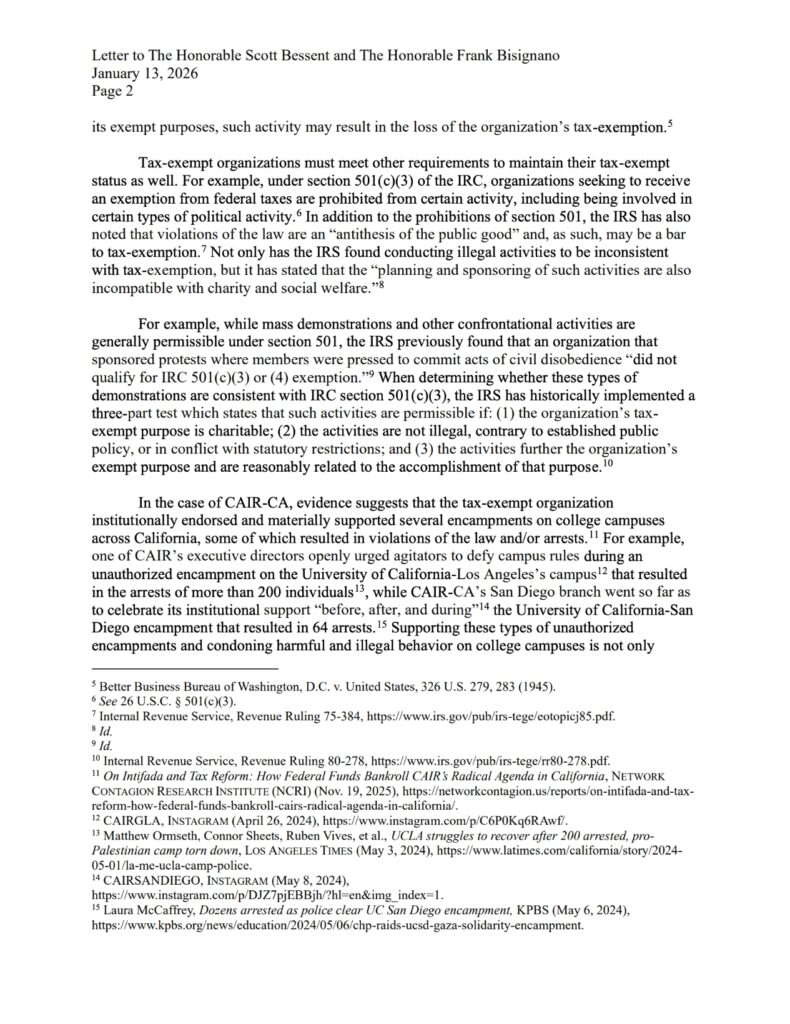
According to IRS guidance, these organizations may not engage in illegal activities, materially support political movements, or sponsor actions that conflict with established public policy. The IRS has previously stated that planning or endorsing unlawful activity can place an organization’s tax-exempt status at risk.
While peaceful demonstrations may be allowed in some circumstances, the IRS applies a multi-part test to determine whether such actions align with an organization’s charitable mission and legal obligations.
Allegations Cited by Lawmakers
In their letter, lawmakers referenced reported incidents involving college campus protests in California. They allege that CAIR-CA provided institutional support for several encampments that resulted in arrests and violations of campus regulations.
According to the letter, one incident at the University of California, Los Angeles led to more than 200 arrests. A separate encampment at the University of California, San Diego reportedly resulted in dozens of arrests. Lawmakers cited media reports and publicly available social media statements to support their claims.
The letter also alleges that CAIR-CA leaders encouraged participants to defy campus rules during certain demonstrations. These claims have not been adjudicated by the IRS and remain allegations pending any formal investigation.
Broader Political and Financial Context
The referral comes amid heightened political debate over nonprofit funding and whether taxpayer dollars indirectly support unlawful or disruptive activities. Lawmakers argue that organizations benefiting from federal tax exemptions should not be involved in conduct that leads to arrests or property damage.
The issue also arises during a period of increased scrutiny of nonprofit transparency and accountability, particularly for groups operating at the intersection of activism and public policy.
Supporters of increased oversight say the IRS review process exists to ensure continued compliance with federal standards. Critics caution that such referrals should be handled carefully to avoid politicizing tax enforcement.
What Happens Next
The IRS is not required to immediately open an investigation, and a referral does not guarantee enforcement action. If the agency chooses to proceed, it may review financial records, public statements, and organizational activities to assess compliance with federal tax law.
Possible outcomes range from no action to penalties or, in rare cases, revocation of tax-exempt status. Any decision would follow a formal administrative review process.
At this stage, the matter remains under consideration, and no conclusions have been reached.
Ending
The request from House lawmakers highlights ongoing debate over nonprofit accountability and the limits of tax-exempt status under U.S. law. While the allegations raise serious questions, any final determination will rest with the IRS following its established procedures.
The case underscores the legal challenges nonprofit organizations face when engaging in public advocacy while receiving federal tax exemptions.