
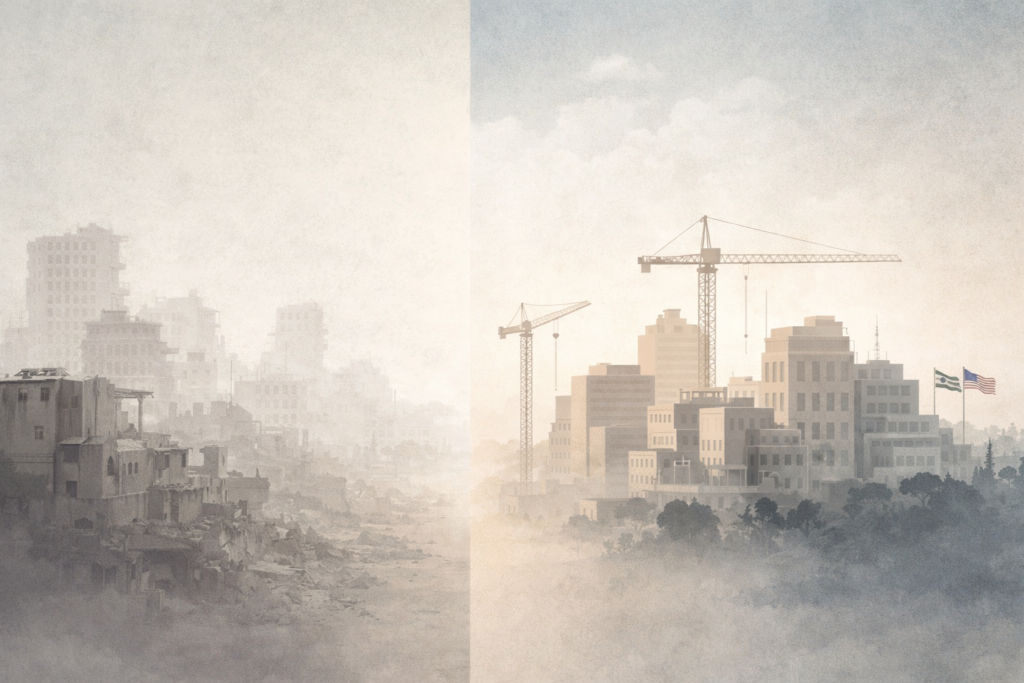
The Trump administration says Gaza is moving from ceasefire to transformation, but the next phase depends on compliance, control, and credibility.
The United States has officially announced the launch of Phase Two of its Gaza peace initiative, signalling a shift from short-term ceasefire efforts to long-term political and security changes.
The announcement was made by U.S. Special Envoy Steve Witkoff, speaking on behalf of President Donald J. Trump. According to U.S. officials, the new phase is designed to move Gaza away from repeated cycles of violence and toward a more stable civilian future.
This marks the most assertive step taken by Washington since the ceasefire began.
What Phase Two Is Really About
Phase Two is not about stopping fighting for a few weeks. It is about changing how Gaza functions altogether.
U.S. officials say the focus is now on removing armed control from the territory and replacing it with civilian governance that can manage daily life, rebuilding, and public services. The plan also aims to ensure that Gaza does not return to being a launch point for future conflicts. In simple terms, the administration believes peace cannot last without security control and political restructuring happening at the same time.
A New Temporary Authority for Gaza
As part of this shift, the United States has backed the creation of a temporary Palestinian-led body known as the National Committee for the Administration of Gaza. This group is expected to oversee Gaza during the transition period.
Officials describe the administration as technocratic, meaning it would be run by professionals rather than political factions. Its role would be to stabilise civilian life, manage reconstruction, and prepare Gaza for whatever long-term arrangement follows. The U.S. says this structure is meant to prevent a power vacuum while security changes are enforced.
What Phase One Achieved
Phase Two builds on what the Trump administration describes as major gains during Phase One.
According to U.S. statements, the initial phase successfully held the ceasefire in place while allowing large volumes of humanitarian aid to enter Gaza. All living hostages were returned, and most of the remains of deceased hostages were recovered. President Trump said the scale and speed of aid delivery reached civilians faster than ever before, adding that even the United Nations acknowledged the effort as unprecedented.
These outcomes, officials argue, created the conditions needed to move forward.
Hamas Now at the Centre of the Decision
The future of Phase Two now depends heavily on Hamas.
The U.S. has made clear that the transition will only proceed if Hamas fully complies with the new framework. American officials say this means ending all armed operations in Gaza, surrendering weapons, dismantling underground tunnel networks, and completing the return of the final deceased hostage. President Trump warned that delays or refusal would bring serious consequences, repeating that Hamas has a clear choice between cooperation and escalation.
So far, Hamas has not publicly confirmed whether it will accept these conditions, raising questions about how smoothly Phase Two can move ahead.
Why Regional Players Matter
The United States credited Egypt, Turkey, and Qatar for helping mediate progress so far.
These countries are expected to continue playing a role as Phase Two unfolds, especially in negotiations, enforcement, and diplomatic coordination. Their involvement adds legitimacy to the process but also introduces new challenges if interests begin to diverge.